
Deglazing a Pan: Turning Browned Bits Into Rich Sauce
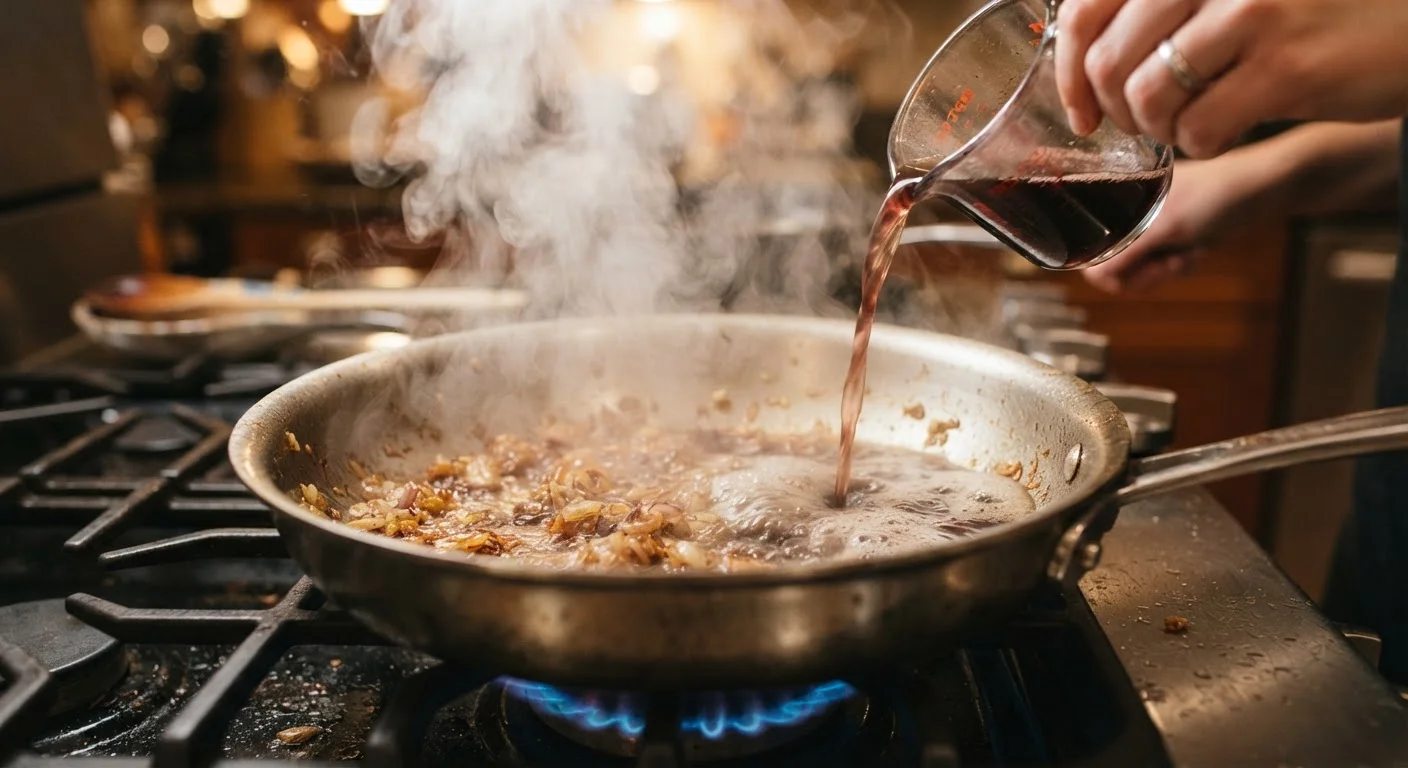
Photo credit: Glowwwatch.com
In this article
Those stuck-on browned bits after searing are packed with flavor. Learn how to deglaze properly and build simple pan sauces from scratch.
Key Takeaways
- The browned bits stuck to your pan after searing are packed with concentrated flavor called fond.
- Deglazing means adding liquid to a hot pan to dissolve the fond and build a quick sauce.
- Wine, broth, juice, or water all work as deglazing liquids depending on the dish.
- Reducing the liquid after deglazing concentrates flavor and creates a cohesive sauce.
- Finishing with cold butter or a squeeze of acid brightens and balances a pan sauce.
What Is Deglazing — and What Is Fond?
If you've ever seared a chicken breast or browned ground beef and noticed a layer of dark, sticky residue clinging to the bottom of the pan, you were looking at fond — a French culinary term for the caramelized proteins and sugars left behind after high-heat cooking. Many home cooks see fond as a mess to scrub away. Professional cooks see it as the foundation of a great sauce.
Deglazing is the technique of adding liquid to a hot pan to dissolve that fond. The dramatic sizzle you hear is the liquid flash-evaporating on contact, loosening the browned bits so you can scrape them free with a wooden spoon or spatula. Those bits dissolve into the liquid and create an instant, deeply flavored base.
Understanding why heat matters before you start helps enormously — see our piece on why your pan temperature matters more than the recipe for a fuller picture. Getting a proper sear is what creates the fond worth deglazing in the first place.
Stainless steel or cast iron skillet
Creates the best fond — nonstick pans inhibit browning and don't release fond the same way.
Wooden spoon or flat-edged spatula
Used to scrape fond off the pan bottom once the liquid is added.
Measuring cup or ladle
Helps you add a consistent, controlled amount of deglazing liquid without flooding the pan.
Fine mesh strainer
Strains out any remaining solids if you want a smooth, restaurant-style sauce.
Choosing Your Deglazing Liquid
Any liquid can technically deglaze a pan, but your choice shapes the final flavor profile significantly. Here are the most common options:
- Dry wine (red or white): Adds acidity and complexity. Use red wine for beef and lamb; white wine for chicken, seafood, and pork. Avoid sweet wines — they can make the sauce cloying.
- Stock or broth: A neutral, savory choice that works with virtually any protein. Chicken stock is especially versatile.
- Beer or hard cider: Adds distinctive bitterness or fruity brightness. Works well with pork or sausage.
- Fruit juice: Orange or apple juice brings sweetness and acid. Best used in combination with stock rather than alone.
- Water: A perfectly valid option when nothing else is available. The sauce will be less complex but still far better than losing the fond entirely.
One guiding principle: use a liquid you would enjoy drinking. Cooking concentrates flavors, so a poor-quality wine or stale broth will produce a mediocre sauce regardless of technique.
Start Small With Your Liquid
When you are new to deglazing, start with just ¼ cup of liquid. This small amount reduces quickly, is easy to control, and produces a more concentrated flavor. As you grow comfortable with the technique, you can scale up for larger batches or more substantial sauces.
How to Deglaze Step by Step
Follow these steps after searing or browning any protein or vegetable. The whole process takes only a few minutes once you understand the flow. Before you begin, make sure you have the right equipment on hand.
What you will need
Sear your protein and remove it from the pan
Cook your meat or vegetables over medium-high to high heat until well browned on at least one side. Remove the food and set it aside to rest. Leave a thin layer of any rendered fat in the pan — pour off excess if there is a pool, keeping roughly one tablespoon. A well-browned surface means rich fond on the pan bottom.
Add aromatics to the hot pan (optional)
If your dish calls for shallots, garlic, or onion, add them to the still-hot pan now and stir for 30–60 seconds until softened and fragrant. This builds another flavor layer before the liquid goes in. Skip this step if you want a simpler, cleaner sauce.
Add your deglazing liquid
With the pan still over the heat, carefully pour in ¼ to ½ cup of your chosen liquid. It will sizzle and steam immediately — this is expected. Start with less liquid than you think you need; you can always add more, but you cannot easily remove it once it is in the pan.
Scrape the fond free
Using a wooden spoon or flat spatula, scrape the bottom of the pan vigorously as the liquid bubbles. The fond should lift off within 30–60 seconds. If bits are stubborn, let the liquid simmer a moment longer and try again. All of those browned bits should dissolve fully into the liquid.
Reduce the liquid to a sauce consistency
Let the liquid simmer over medium heat, stirring occasionally, until it reduces by roughly half and lightly coats the back of a spoon. This typically takes 2–5 minutes depending on the amount of liquid and your heat level. The sauce will thicken slightly as water evaporates and flavors concentrate.
Finishing and Balancing Your Pan Sauce
Once the fond is dissolved and the liquid has reduced, you have a simple pan sauce. To elevate it further, consider these finishing touches:
- Cold butter: Swirl 1–2 tablespoons of cold butter into the pan off the heat. This technique — called monter au beurre in classical French cooking — adds gloss and a silky richness without making the sauce greasy.
- Fresh herbs: Stir in chopped parsley, thyme, or tarragon at the very end. Heat destroys delicate herb flavor quickly, so add them last.
- Acid: A small squeeze of lemon juice or a splash of vinegar brightens the whole sauce and cuts through richness.
- Salt and pepper: Always taste before serving. Reduction concentrates salt, so season carefully at the end rather than throughout the process.
The habit of tasting and adjusting is one of the most important skills you can build — our article on tasting as you go explains how to develop that instinct. Once pan sauces feel comfortable, the broader flavor-building ideas in building a flavorful dish from scratch will start to click as well.

Author
Food & Drinks Editorial Team
Food & Drinks Editorial Team is the collective byline for our editorial team and contributor network. Articles published under this byline or an editorial pen name are researched, written, and reviewed according to our editorial standards for clarity, consistency, and independence before publication.
View all articles →