
Preparing Your Car for a Long Road Trip
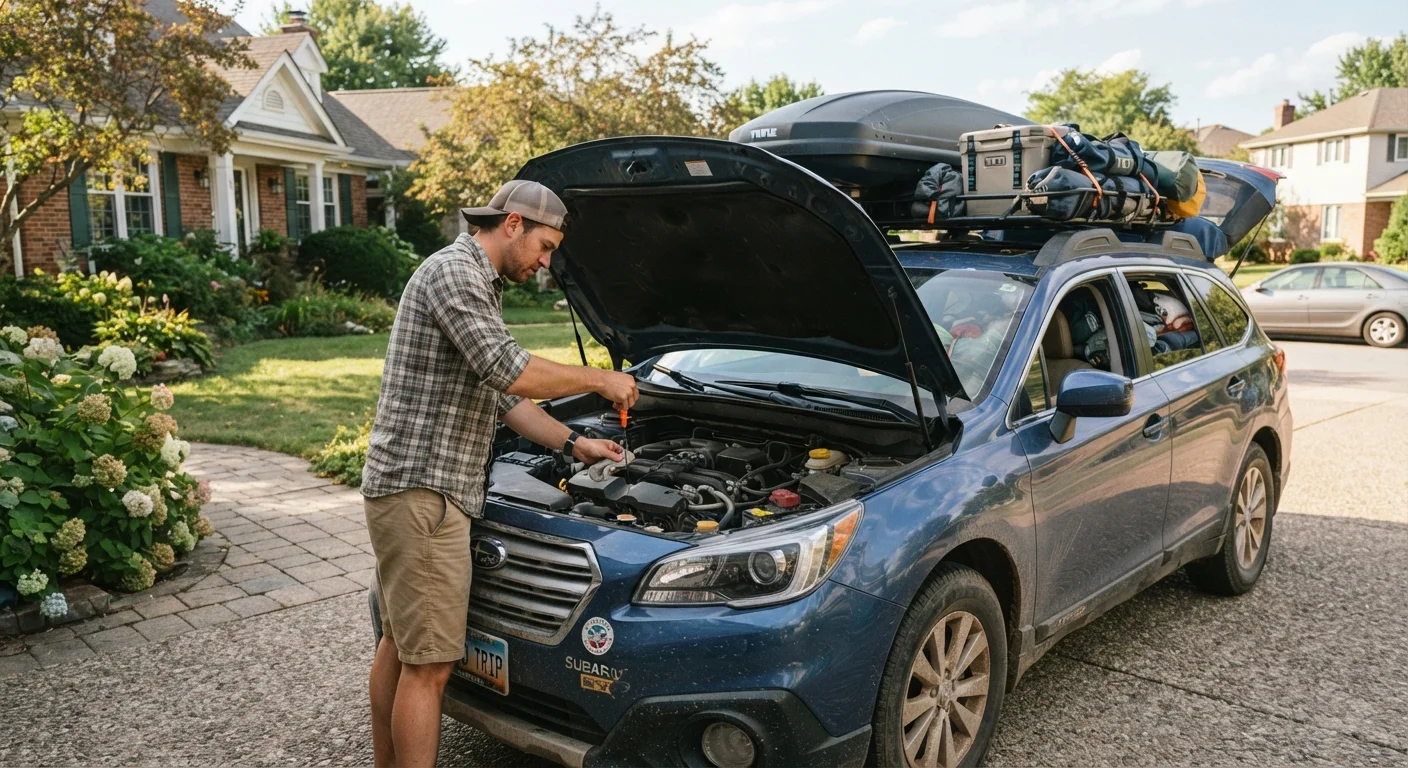
Photo credit: Glowwwatch.com
In this article
A practical pre-trip checklist covering tires, fluids, brakes, emergency supplies, and other factors worth checking before a long drive.
Key Takeaways
- Tires, fluids, and brakes are the three most critical systems to check before any long drive.
- Most pre-trip checks take under two hours and require only basic tools.
- A well-stocked emergency kit can make a breakdown manageable rather than dangerous.
- Catching a small problem at home is far less costly than dealing with it on the road.
- Your owner's manual is the most reliable source for fluid specs and service intervals.
Why a Pre-Trip Check Is Worth the Time
A long road trip puts sustained stress on your vehicle in ways that ordinary commuting doesn't. Highway speeds, extra weight from luggage and passengers, and hours of continuous engine operation can turn a minor issue into a roadside breakdown. The good news is that most problems are detectable before you leave — if you know what to look for.
This checklist is designed for everyday drivers, not mechanics. You don't need special training to check tire pressure, top off fluids, or test your lights. What you do need is about an hour and a willingness to actually look. For a broader picture of what regular upkeep involves, see our guide to routine car maintenance.
Tires
Fluids
Brakes and Belts
Lights and Electrical
Wipers and Visibility
Emergency Kit
Tools and Supplies to Have on Hand
You don't need a full workshop to run through this checklist. A handful of inexpensive items will cover everything below — and several of them should stay in your car permanently as part of an emergency kit.
Tire pressure gauge
Accurately measures PSI in each tire so you can inflate or deflate to the correct level.
Flashlight or work light
Lets you see into the engine bay, under the vehicle, and inside the trunk clearly.
Clean rags or paper towels
Used for wiping dipsticks and checking fluid colors and conditions.
Portable jump starter
Allows you to restart a dead battery without needing another vehicle nearby.
Tread depth gauge
Gives a precise tread measurement if you want a more accurate reading than the quarter test.
Owner's manual
The definitive reference for your vehicle's fluid specifications, tire pressure, and service intervals.
What to Do If You Find a Problem
If a check reveals something beyond a fluid top-off — worn brake pads, a bulging tire sidewall, a warning light you can't explain — don't ignore it. Have the vehicle inspected by a qualified mechanic before your trip. Postponing a repair until after a long drive can turn a manageable fix into a much costlier one, or worse, a dangerous situation far from help.
Don't Drive on a Known Problem
If any check reveals a safety concern — low brake fluid, a cracked sidewall, a warning light you can't identify — have it evaluated by a qualified mechanic before you leave. Road trips amplify existing issues; what's manageable in your driveway can become dangerous at 70 mph. No timeline is worth putting yourself or your passengers at risk.
For a quick pre-departure walkthrough you can run right before pulling out of the driveway, see our pre-trip safety checklist. And if you're heading into extreme heat or cold, seasonal car care guidance covers additional checks worth doing before those conditions.
Check Fluids When the Engine Is Cold
Checking coolant or removing the radiator cap on a hot engine can result in serious burns from pressurized steam. Always let the engine cool for at least 30 minutes before opening the coolant reservoir. Oil readings are also more accurate on a cold engine.
This article is for general informational purposes only. Always consult a qualified mechanic if you are unsure about your vehicle's condition before driving.

Author
Autos Editorial Team
Autos Editorial Team is the collective byline for our editorial team and contributor network. Articles published under this byline or an editorial pen name are researched, written, and reviewed according to our editorial standards for clarity, consistency, and independence before publication.
View all articles →