
Envelope Budgeting: How a Cash-Based System Curbs Overspending
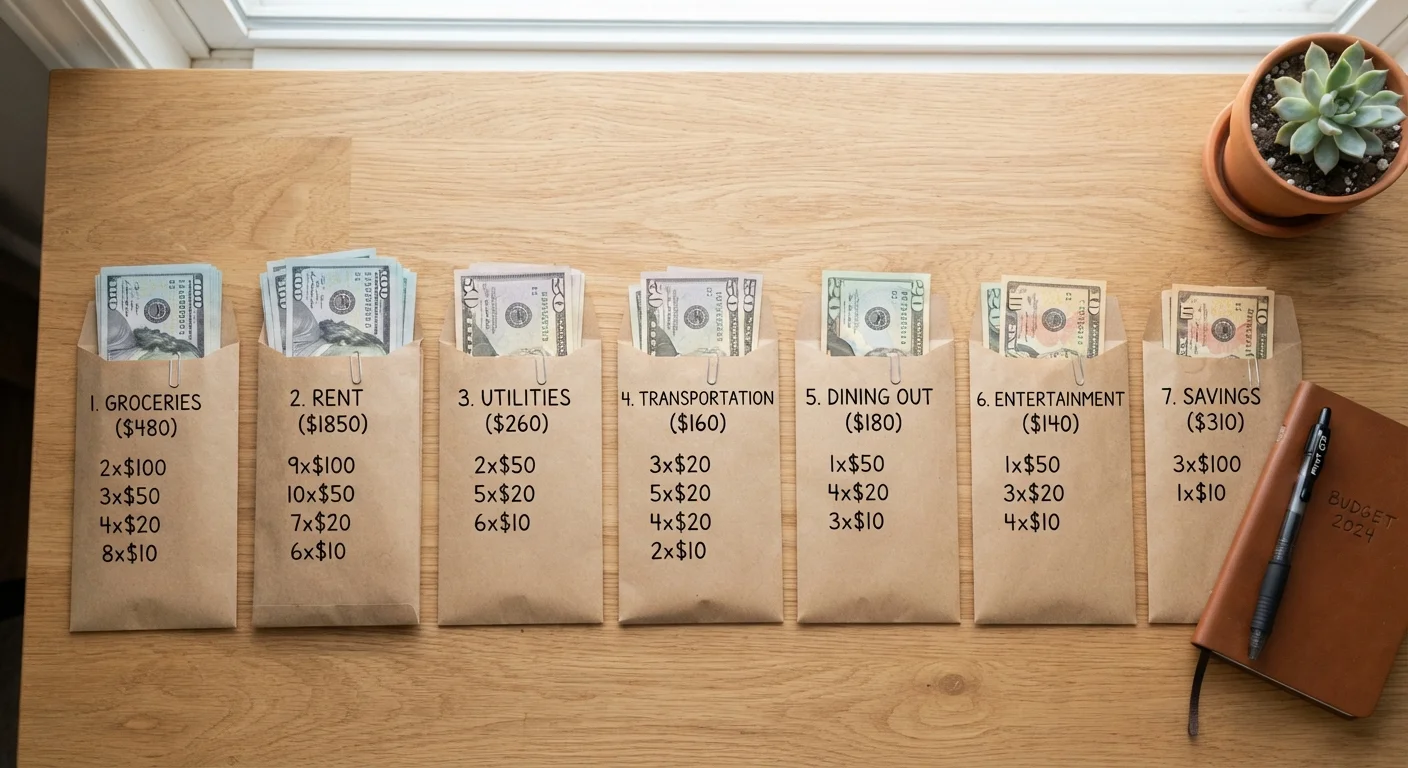
Photo credit: Glowwwatch.com
In this article
The envelope method allocates physical (or digital) cash to each spending category. Learn how it works, who it suits, and its practical limits.
Key Takeaways
- Envelope budgeting assigns a fixed cash amount to each spending category at the start of the month.
- When an envelope is empty, spending in that category pauses — building a natural spending boundary.
- Digital envelope apps replicate the system without requiring physical cash.
- The method works best for variable, discretionary expenses rather than fixed bills.
- It requires consistent setup each month but demands no financial background to use.
- Beginners often find envelope budgeting more intuitive than spreadsheet-based methods.
How the Envelope System Works
At the start of each month, you list your spending categories and decide how much money each one should receive. If you budget $400 for groceries, $150 for gas, and $100 for dining out, you withdraw that total in cash and physically place the right amount into each labeled envelope.
Throughout the month, you spend only from the relevant envelope. When the grocery envelope hits zero, grocery shopping waits until next month — or you consciously transfer cash from a lower-priority envelope. That deliberate pause is the system's central mechanism: it forces a real-time decision instead of a vague mental note.
For a grounding in the vocabulary you'll encounter when setting this up, see our plain-English budgeting glossary before you begin.
Start With Just Three Envelopes
If a full envelope system feels overwhelming, begin with only your top three overspending categories — often groceries, dining out, and entertainment. Once those feel routine after a month or two, add more categories gradually. A system you actually maintain is always more effective than a perfect system you abandon.
Physical Cash vs. Digital Envelopes
The traditional version uses real paper envelopes and withdrawn cash. The tactile experience is a meaningful part of why it works — research in behavioral economics consistently shows that paying with physical currency feels more "real" than swiping a card, which can naturally reduce impulsive purchases. For a fuller look at those trade-offs, see our article on paying cash for everything.
The digital version uses budgeting apps that mimic the same structure with virtual categories. You assign dollar amounts to each category, and the app tracks your balance as you log or link purchases. This eliminates the risk of losing physical cash and makes the method more practical for online shopping or automatic payments.
Neither version is objectively superior. The physical method tends to be more viscerally effective for people who struggle with emotional spending; the digital version suits those who rarely use cash or travel frequently.
78%
Americans living paycheck to paycheck at some point
A widely cited figure from multiple consumer financial surveys suggests the majority of US households have experienced cash-flow stress, highlighting why spending-control tools like envelope budgeting matter.
~$1,700
Average monthly discretionary spending per US consumer
The U.S. Bureau of Labor Statistics Consumer Expenditure Survey data suggests a significant share of household spending is discretionary — the category envelope budgeting is best designed to manage.
Less
Spending when paying with cash vs. cards
Multiple behavioral studies, including research published in consumer psychology journals, have found that people tend to spend measurably less when paying with physical cash compared to credit or debit cards.
Which Expenses Fit the Envelope Model
Envelope budgeting works best for variable expenses — spending that changes from month to month and is largely within your control. Groceries, dining out, clothing, entertainment, and personal care are natural fits. These are the categories where overspending tends to happen gradually and unnoticed.
Fixed expenses — rent, mortgage payments, insurance premiums, and loan payments — are better handled as automatic transfers or scheduled payments outside the envelope structure. Because these amounts don't change, there's little behavioral value in putting them in an envelope.
Understanding how much of your budget falls into the flexible category is key. Our guide to discretionary spending explains what counts as discretionary and how to manage it sustainably.
Practical Limits to Keep in Mind
No budgeting method is a perfect fit for everyone, and envelope budgeting has genuine constraints worth acknowledging before you commit.
- Setup time: The system requires intentional effort each month — withdrawing cash, sorting envelopes, and tracking balances. It doesn't run automatically.
- Cash security: Keeping larger sums of cash at home introduces risk. Physical cash is not insured the way bank deposits are.
- Digital payments: Many everyday purchases — online bills, subscriptions, autopay utilities — don't lend themselves to a cash-in-envelope structure.
- Irregular income: People whose income varies month to month may find it harder to pre-set fixed envelope amounts. They may need to adapt the system by budgeting based on a conservative income estimate.
If you want to compare envelope budgeting against other popular frameworks, our breakdown of zero-based vs. 50/30/20 budgeting shows how the methods differ in structure and lifestyle fit.
Getting Started This Month
Starting is simpler than it might appear. Follow this sequence:
- Calculate your monthly take-home income — the amount that actually lands in your account after taxes and deductions.
- List your fixed expenses first — rent, utilities, minimum debt payments. Subtract these from your income.
- Divide what remains into variable categories — groceries, gas, dining, fun, clothing. Assign a realistic dollar amount to each.
- Fund your envelopes — either withdraw cash and sort it, or set up digital categories in a budgeting app.
- Spend from the correct envelope only — and log every purchase against it.
At the end of each month, review which envelopes ended early, which had money left over, and adjust your allocations accordingly. Our end-of-month budget review checklist is a useful companion for that process.
This article is for general informational and educational purposes only and does not constitute personalized financial advice. Consult a qualified financial professional for guidance specific to your situation.
Frequently Asked Questions

Author
Personal Finance Editorial Team
Personal Finance Editorial Team is the collective byline for our editorial team and contributor network. Articles published under this byline or an editorial pen name are researched, written, and reviewed according to our editorial standards for clarity, consistency, and independence before publication.
View all articles →