
Why Bathroom Remodels Go Over Budget — and the Planning Habits That Help
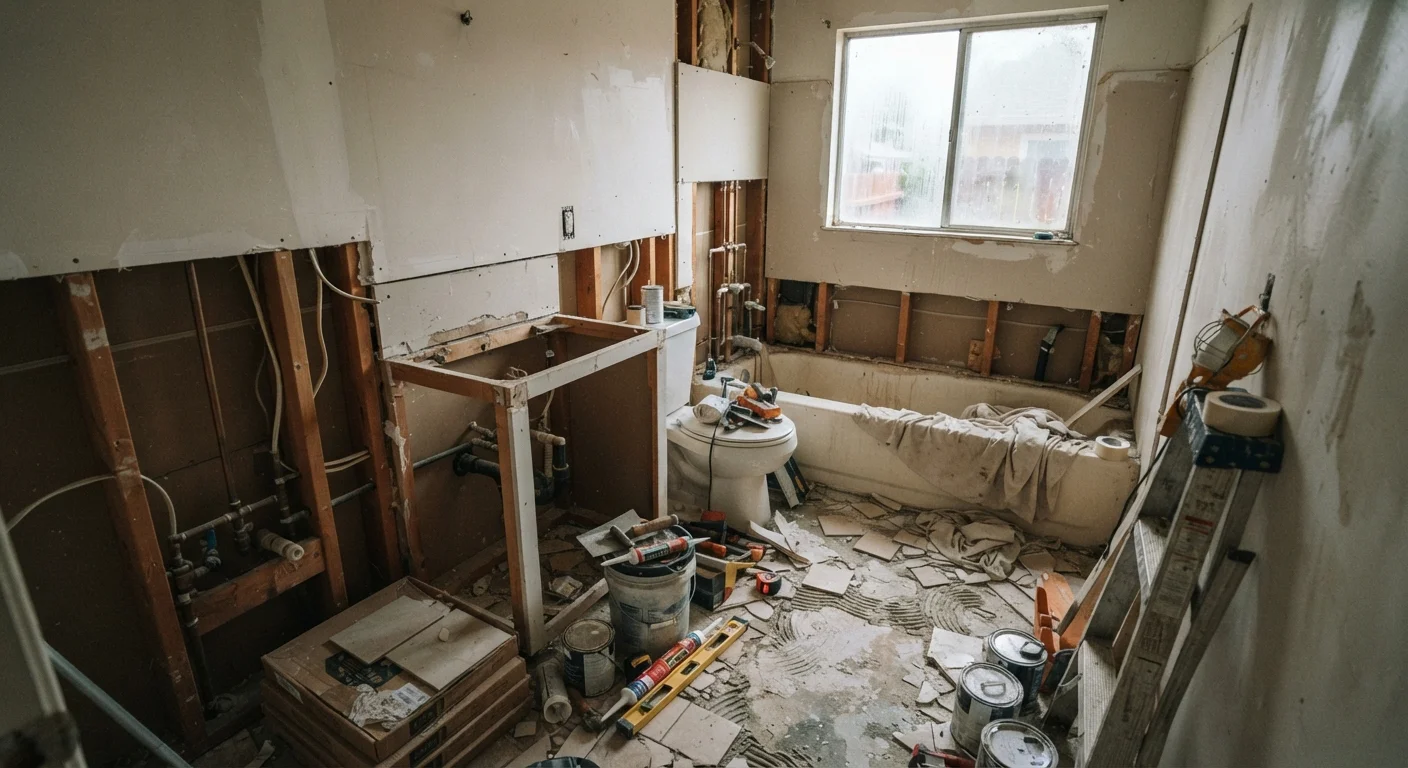
Photo credit: Glowwwatch.com
In this article
Discover the most common reasons bathroom renovations exceed estimates and what informed planning looks like before you commit to a project.
Key Takeaways
- Most bathroom remodels exceed their original budget due to hidden conditions discovered after demolition begins.
- Scope creep — adding upgrades mid-project — is one of the most controllable budget risks.
- Getting multiple detailed written estimates before work starts significantly reduces surprise costs.
- A contingency fund of 15–20% of your total budget is considered standard practice for bathroom renovations.
- Permit requirements vary by locality and skipping them can create costly legal and resale complications.
Why Bathroom Remodels Are Especially Budget-Sensitive
Bathrooms pack more systems into a small footprint than almost any other room in a home — plumbing supply and drain lines, electrical circuits, ventilation, waterproofing, and tile work all converge in a space that is often less than 50 square feet. This density means that almost every decision interacts with another, and a change in one area can generate costs in two or three others.
Unlike painting a living room or replacing flooring in a bedroom, a bathroom remodel frequently requires coordinating licensed tradespeople: plumbers, electricians, and tile setters may all need to be on site at different stages, each with their own scheduling constraints and labor costs. That coordination complexity is one of the structural reasons bathroom projects drift over budget even when homeowners have done genuine research beforehand.
For readers who want broader context on how renovation plans connect to household finances, our guide on why budgets fall apart covers the same psychological and structural pitfalls that apply to any large spending commitment.
~30%
Average budget overrun on home remodels
Industry surveys and contractor associations consistently report that a significant share of home renovation projects exceed their original estimate, with bathroom remodels among the most frequently affected categories.
15–20%
Recommended contingency buffer
Most professional estimators and remodeling industry guidance recommend setting aside 15–20% of a project's projected cost to cover unforeseen conditions discovered during demolition.
The Planning Habits That Keep Projects on Track
The most effective cost-control strategy happens before a single tile is removed. Homeowners who finish bathroom remodels close to their original budget tend to share a few consistent habits: they define scope precisely in writing, they communicate change decisions through a formal process with their contractor, and they treat the project timeline as a budget variable, not just a convenience factor.
Hidden Conditions Can Reshape Your Entire Budget
Once demolition begins, contractors frequently uncover water damage, outdated wiring, mold, or non-code-compliant plumbing that must be corrected before any new work proceeds. These discoveries are not the contractor's fault or yours — they are a predictable feature of working inside older walls. Budget for the unexpected before you start, not after it finds you.
Before finalizing any scope of work, use a pre-project checklist that covers permits, contractor vetting, material lead times, and safety. Our homeowner's pre-project checklist walks through each of these areas in detail.
It's also worth remembering that not every bathroom upgrade translates into value at resale. If your remodel is partly motivated by a future sale, our article on home improvement projects that can hurt resale value can help you calibrate which investments make sense for your situation.
Don't Skip Permits to Save Money
Unpermitted bathroom work — especially plumbing and electrical changes — can create serious problems at resale and may result in fines or mandatory removal of completed work. Always verify which permits your local municipality requires before work begins. A licensed contractor should be able to guide you through this process.
Common Mistakes That Push Budgets Over the Limit
The mistakes below represent the most frequent and most preventable reasons bathroom remodels exceed their estimates. Understanding why each one happens — and what the practical fix looks like — gives you a meaningful advantage before your project begins.
Setting a budget without a contingency buffer.
Why it happens: Homeowners often treat the contractor's estimate as the final number, leaving no room for surprises that are routine on remodel jobs.
Changing design decisions after demolition has started.
Why it happens: Seeing the space opened up often inspires new ideas, and homeowners underestimate how expensive mid-project changes are compared to pre-project planning.
Collecting only one contractor estimate.
Why it happens: The process of interviewing multiple contractors feels time-consuming, so many homeowners accept the first quote that seems reasonable.
Underestimating material lead times.
Why it happens: Homeowners assume popular fixtures and tiles are immediately available, not realizing that specific finishes or custom sizes can take weeks to arrive.
Confusing cosmetic renovation costs with structural or systems work.
Why it happens: Pricing from online resources or social media often reflects surface-level refreshes, not projects that involve moving plumbing, updating electrical panels, or addressing ventilation deficiencies.
Bathroom remodels are not uniquely difficult — they are dense and interdependent in ways that reward preparation. The homeowners who navigate them most successfully are not those with the largest budgets; they are the ones who made the most decisions on paper before the work started on the wall.

Author
Home & Garden Editorial Team
Home & Garden Editorial Team is the collective byline for our editorial team and contributor network. Articles published under this byline or an editorial pen name are researched, written, and reviewed according to our editorial standards for clarity, consistency, and independence before publication.
View all articles →