
Macronutrients Explained: What Carbs, Protein, and Fat Actually Do in Your Body
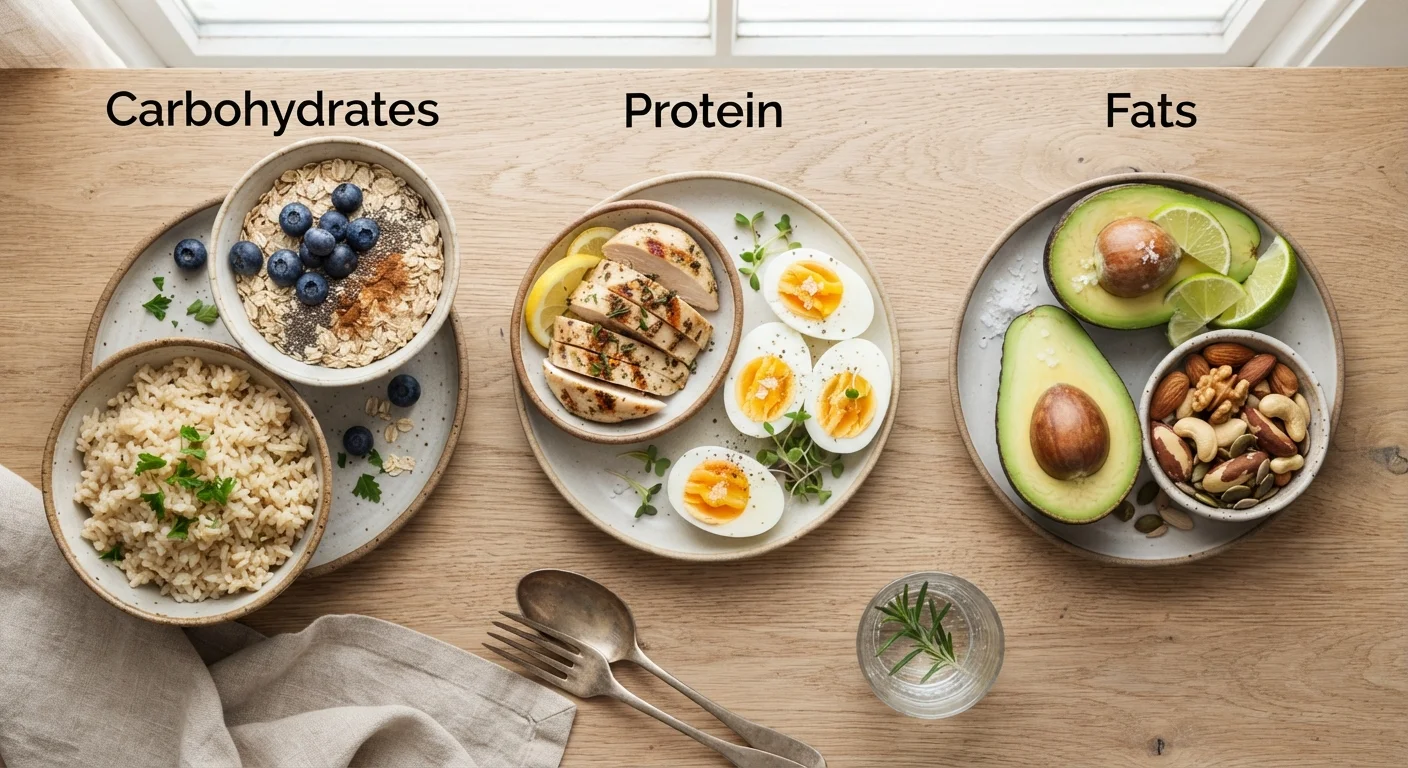
Photo credit: Glowwwatch.com
In this article
Learn what macronutrients are, why your body needs all three, and how each one fuels different functions — without the diet-culture noise.
Key Takeaways
- Carbohydrates are the body's preferred and most efficient fuel source, especially for the brain.
- Protein supplies amino acids that build and repair tissues, enzymes, and hormones.
- Dietary fat supports cell structure, hormone production, and the absorption of fat-soluble vitamins.
- No single macronutrient is inherently harmful — balance and food quality both matter.
- The right ratio of macronutrients varies by individual; consult a registered dietitian for personalized guidance.
Why Macronutrients Matter
Every time you eat, your body extracts energy and raw materials from food. Macronutrients are the primary carriers of both. Understanding what each one does — not in abstract diet-culture terms, but in terms of actual physiology — helps you make sense of why nutrition guidance looks the way it does.
This article is part of a broader nutrition fundamentals guide that covers everything from food labels to dietary patterns. Here, we'll focus specifically on the three macros: what they are, what they do in your body, and why all three earn their place at the table.
This article is for general informational and educational purposes only. It is not medical or dietary advice. For guidance specific to your health, consult a registered dietitian or qualified healthcare professional.
45–65%
Recommended share of daily calories from carbohydrates
According to the Dietary Guidelines for Americans, carbohydrates should make up roughly 45–65% of total daily calorie intake for most healthy adults.
10–35%
Recommended daily calorie range from protein
The Acceptable Macronutrient Distribution Range (AMDR) for protein is 10–35% of total calories, per the National Academies of Sciences, Engineering, and Medicine.
20–35%
Recommended daily calorie range from fat
The AMDR for total fat is 20–35% of total daily calories, with guidance to minimize trans fats and limit saturated fats according to the Dietary Guidelines for Americans.
Carbohydrates: Your Body's First Choice for Fuel
Carbohydrates are broken down into glucose — a simple sugar your cells use for energy. The brain, in particular, relies heavily on a steady glucose supply. When you eat carbs, your digestive system converts them to glucose, which enters the bloodstream and is either used immediately or stored as glycogen in the liver and muscles for later use.
Not all carbohydrates behave the same way. Simple carbohydrates (like those in white bread or sugary drinks) digest quickly, causing a faster rise in blood glucose. Complex carbohydrates — found in whole grains, legumes, and most vegetables — take longer to break down, delivering more sustained energy and often coming packaged with fiber.
Fiber, a type of carbohydrate the body can't fully digest, feeds beneficial gut bacteria, supports digestive regularity, and helps moderate blood sugar and cholesterol levels. It's also one of the nutrients many Americans fall short on — a topic explored in our article on nutrients most Americans don't get enough of.
A Simple Way to Balance Carb Quality
When choosing carbohydrate-rich foods, look at fiber content on the nutrition label. A food with at least 3 grams of fiber per serving is generally considered a good source. This single criterion can help you shift toward more complex carbohydrates without needing to analyze every nutrient in detail.
Protein: The Body's Builder and Repairman
Protein is made up of smaller units called amino acids. Your body uses 20 different amino acids to construct everything from muscle fibers and skin to enzymes, hormones, and immune antibodies. Nine of these amino acids are considered "essential" — meaning your body can't make them on its own, so they must come from food.
When you eat protein, digestion breaks it down into individual amino acids, which are then reassembled according to your body's current priorities. During periods of growth, illness, or physical stress (like exercise), protein needs are higher because more repair and synthesis is happening. For the average healthy adult, protein also contributes to satiety — helping meals feel more filling — though it is not the body's preferred fuel source under normal conditions.
Animal sources like meat, poultry, fish, eggs, and dairy typically provide all nine essential amino acids in one package. Plant sources like beans, lentils, tofu, and whole grains can collectively supply all essential amino acids when eaten across a varied diet, though individual plant proteins vary in their amino acid profiles.
Fat: More Useful Than Its Reputation Suggests
Dietary fat has been mischaracterized for decades. While excess intake of certain fats does carry health risks, fat as a macronutrient serves several functions that are genuinely indispensable. Every cell membrane in your body contains fat. Fat is required to absorb vitamins A, D, E, and K — all fat-soluble nutrients that dissolve only in the presence of dietary fat. Fat also plays a direct role in producing steroid hormones, including sex hormones, and supports brain structure and function.
The type of fat matters considerably. Unsaturated fats — found in olive oil, nuts, seeds, avocado, and fatty fish — are generally associated with favorable cardiovascular outcomes in research. Saturated fats, found in butter, fatty meats, and full-fat dairy, are consumed in moderate amounts in most dietary guidance. Trans fats, which are partially hydrogenated industrial oils, have been largely phased out of the US food supply due to their well-documented cardiovascular risks.
To understand how fat and other nutrients compare at the micro level, see our guide to vitamins and minerals, which covers the fat-soluble vitamins fat helps your body absorb.
Putting It All Together
No single macronutrient is the villain or the hero of your diet. Each one fills roles the others can't fully cover. Cutting any of them drastically — without a clear medical reason and professional guidance — tends to create gaps that the body compensates for in less efficient ways.
What matters most is the overall quality and variety of foods you eat, not precise gram-counting. Whole, minimally processed foods tend to deliver macronutrients in combinations that support long-term health. Once you understand what each macro does, the concept of nutrient density — choosing foods that deliver the most nutritional value per calorie — becomes a natural next step. For a broader view of how macros fit alongside vitamins and minerals, visit our macronutrients and micronutrients explainer.
If you want to dial in your macronutrient balance for a specific health goal, a registered dietitian is the right resource — they can account for your health history, activity level, and individual needs in ways that no general article can.
Frequently Asked Questions

Author
Food & Drinks Editorial Team
Food & Drinks Editorial Team is the collective byline for our editorial team and contributor network. Articles published under this byline or an editorial pen name are researched, written, and reviewed according to our editorial standards for clarity, consistency, and independence before publication.
View all articles →