
What Drivers Get Wrong About Right-of-Way Rules
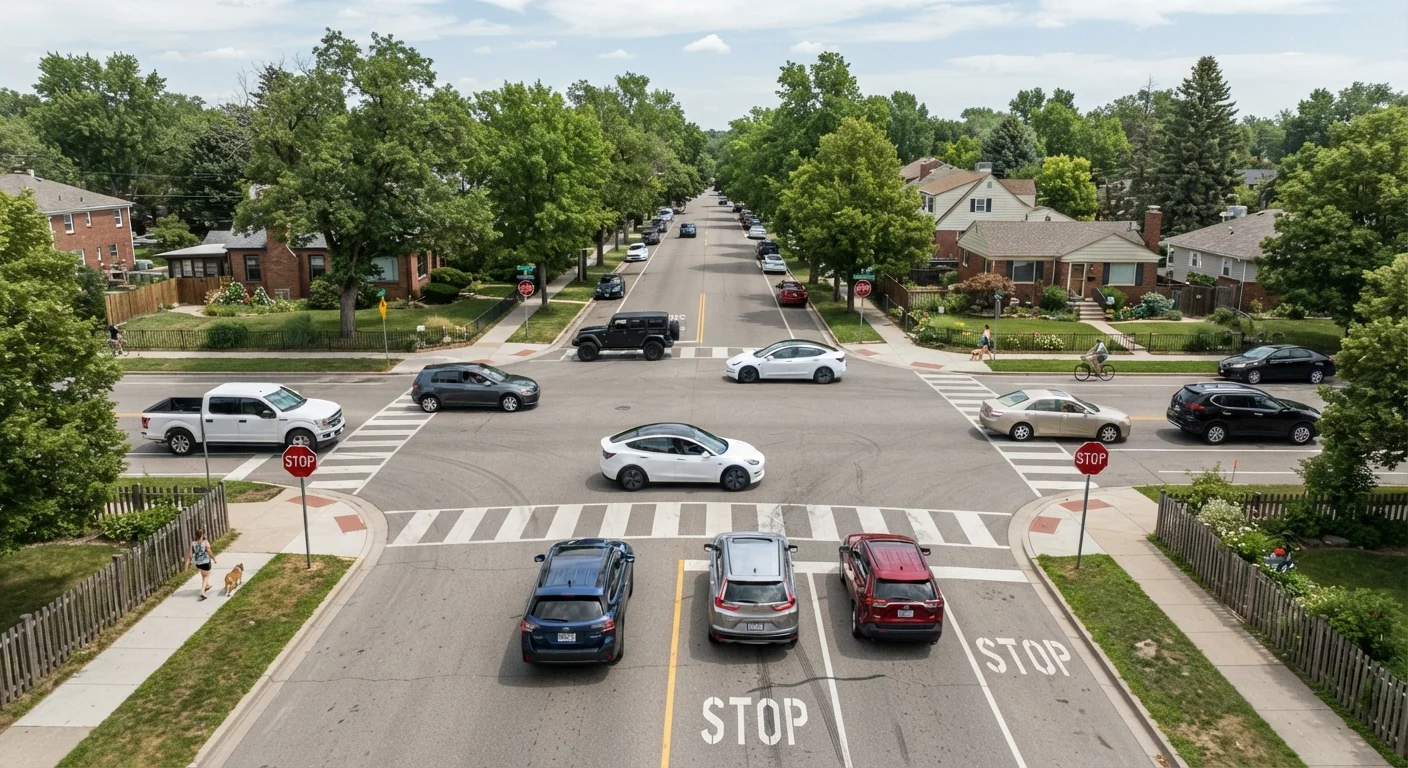
Photo credit: Glowwwatch.com
In this article
Right-of-way is widely misunderstood—even by experienced drivers. Clear up the most common myths with accurate explanations of U.S. traffic law.
Key Takeaways
- Right-of-way is never 'taken' — it is always yielded by one driver to another.
- Having the right-of-way does not protect you from legal liability if a crash results.
- At four-way stops, arrival order and right-side priority determine who goes first.
- Pedestrians do not have automatic right-of-way in every situation — location matters.
- Funeral processions and emergency vehicles follow specific rules many drivers overlook.
Why Right-of-Way Confuses So Many Drivers
Right-of-way isn't a concept taught in great depth, and most drivers haven't reviewed their state's traffic code since they got their license. The result is a patchwork of half-remembered rules, myths picked up from other drivers, and genuine misunderstandings about how priority actually works on the road.
The core principle is simple: right-of-way rules determine who must wait and who may proceed. Nobody takes the right-of-way — one driver yields it to another. That distinction matters, because it means even the driver with priority has a responsibility to drive safely. Misunderstanding this has real consequences. Intersection crashes account for a significant share of all traffic incidents in the U.S., and right-of-way disputes are a frequently cited contributing factor.
~40%
Of crashes occur at intersections
According to the Federal Highway Administration, roughly 40% of all traffic crashes in the U.S. happen at or near intersections, where right-of-way disputes are a leading contributing factor.
2 seconds
Recommended intersection scan time before proceeding
Traffic safety educators commonly recommend looking left, right, and left again — pausing approximately two seconds — before entering any intersection, even on a green light.
The myths below cover the scenarios where drivers most often get it wrong — and what the rules actually say.
Common Right-of-Way Myths — Corrected
Myth
The driver on the right always has the right-of-way, no matter what.
Fact
The 'right-side rule' applies only at uncontrolled intersections where no signs or signals are present — and even then, other conditions can override it.
The right-side rule is real but narrowly applied. It governs situations where two vehicles arrive at an intersection simultaneously and no traffic control device is present. In that case, the driver on the left yields to the driver on the right. But this rule does not apply at four-way stops, signalized intersections, T-intersections, or anywhere a yield sign is posted. Treating it as a universal rule leads drivers to misjudge situations where entirely different priorities apply.
Myth
Pedestrians always have the right-of-way over vehicles.
Fact
Pedestrians have right-of-way at marked crosswalks and many intersections, but they are still required to obey traffic signals and not step into traffic unexpectedly.
Most states give pedestrians the right-of-way when they are lawfully within a crosswalk. However, pedestrians who cross mid-block, dart into traffic, or ignore a 'Don't Walk' signal are not automatically protected by right-of-way rules. Drivers are still required to use reasonable care to avoid hitting a pedestrian in any location — but pedestrians share legal responsibility for their own behavior. Neither party gets a blanket pass.
Myth
If you have a green light, you have the right-of-way over everyone.
Fact
A green light gives you permission to proceed, but you must still yield to vehicles already in the intersection and emergency vehicles approaching with lights and sirens.
A green signal is authorization to go — not a guarantee the intersection is clear. Drivers running a red light, pedestrians mid-crossing, and emergency vehicles responding to a call all take priority over your green light in practice and often in law. Many intersection crashes happen precisely because a driver assumed a green light meant unconditional right-of-way. Scan before entering, even on green.
Myth
At a four-way stop, the first car to arrive always goes first.
Fact
Arrival order matters, but when two or more cars arrive at the same time, the vehicle on the left must yield to the vehicle on the right.
Arrival order is the first tiebreaker at a four-way stop — the vehicle that stopped first proceeds first. But when cars arrive simultaneously, the right-side rule kicks in: the driver on the left yields. If vehicles are directly across from each other and both going straight, they may proceed at the same time. Left-turning drivers across from oncoming straight traffic must yield. Understanding these layered rules prevents the hesitation and confusion that causes near-misses at four-way stops.
Myth
You don't need to pull over for a funeral procession if you have the right-of-way.
Fact
Most U.S. states grant funeral processions the right-of-way, and cutting into or through a procession can be illegal and carries fines in many jurisdictions.
Funeral procession laws vary by state, but a majority of states allow procession vehicles to proceed through intersections together even on a red light, provided the lead vehicle entered legally. Drivers are typically required to yield and avoid interrupting the procession. Cutting through is not only disrespectful — it can expose you to a moving violation. Check your state's specific statute if you're unsure.
Myth
Merging vehicles always have the right-of-way because they're entering traffic.
Fact
Merging drivers must yield to vehicles already traveling in the lane they are entering — it is never the other way around.
This is one of the most persistent myths on the road. A driver merging onto a highway or into a travel lane is required by law in every state to yield to existing traffic. The vehicles already in the lane do not have to slow down or move over to accommodate a merger (though courteous drivers often do). Believing that merging gives you priority is a recipe for sideswipe collisions. See where experienced drivers make avoidable errors for more on merging mistakes.
Understanding these distinctions won't just help you pass a written test — it can prevent real crashes. If you've ever had a close call at an intersection, there's a reasonable chance a right-of-way misunderstanding played a role. Aggressive driving tied to right-of-way disputes also connects to following behavior — tailgating is a related hazard that compounds intersection danger.
Right-of-Way Is Not a Legal Shield
Even if you had the legal right-of-way, you can still be found at fault if you failed to take reasonable steps to avoid a collision. Traffic laws in every U.S. state require drivers to exercise due care regardless of who had priority. Never assume right-of-way alone protects you from liability.
Putting It Into Practice
Knowing the rules is one thing. Applying them in real traffic — where other drivers may not know or follow them — is another. Defensive driving means being prepared for the driver who doesn't yield, the pedestrian who steps off the curb unexpectedly, or the car that runs a red. Your goal isn't to be technically right; it's to get where you're going safely.
Asserting Right-of-Way Can Still Cause Crashes
Insisting on your right-of-way when another driver is clearly about to proceed anyway is a common cause of preventable collisions. Defensive driving means being prepared to yield even when you're technically in the right. No traffic priority is worth risking a crash.
When in doubt at any intersection, pause, make eye contact with other drivers if possible, and confirm everyone's intentions before moving. A moment of caution costs far less than a collision. Right-of-way rules exist to create order — but no rule eliminates the need for judgment behind the wheel.

Author
Autos Editorial Team
Autos Editorial Team is the collective byline for our editorial team and contributor network. Articles published under this byline or an editorial pen name are researched, written, and reviewed according to our editorial standards for clarity, consistency, and independence before publication.
View all articles →