
Teen Drivers and Risk: What Parents and New Drivers Should Understand
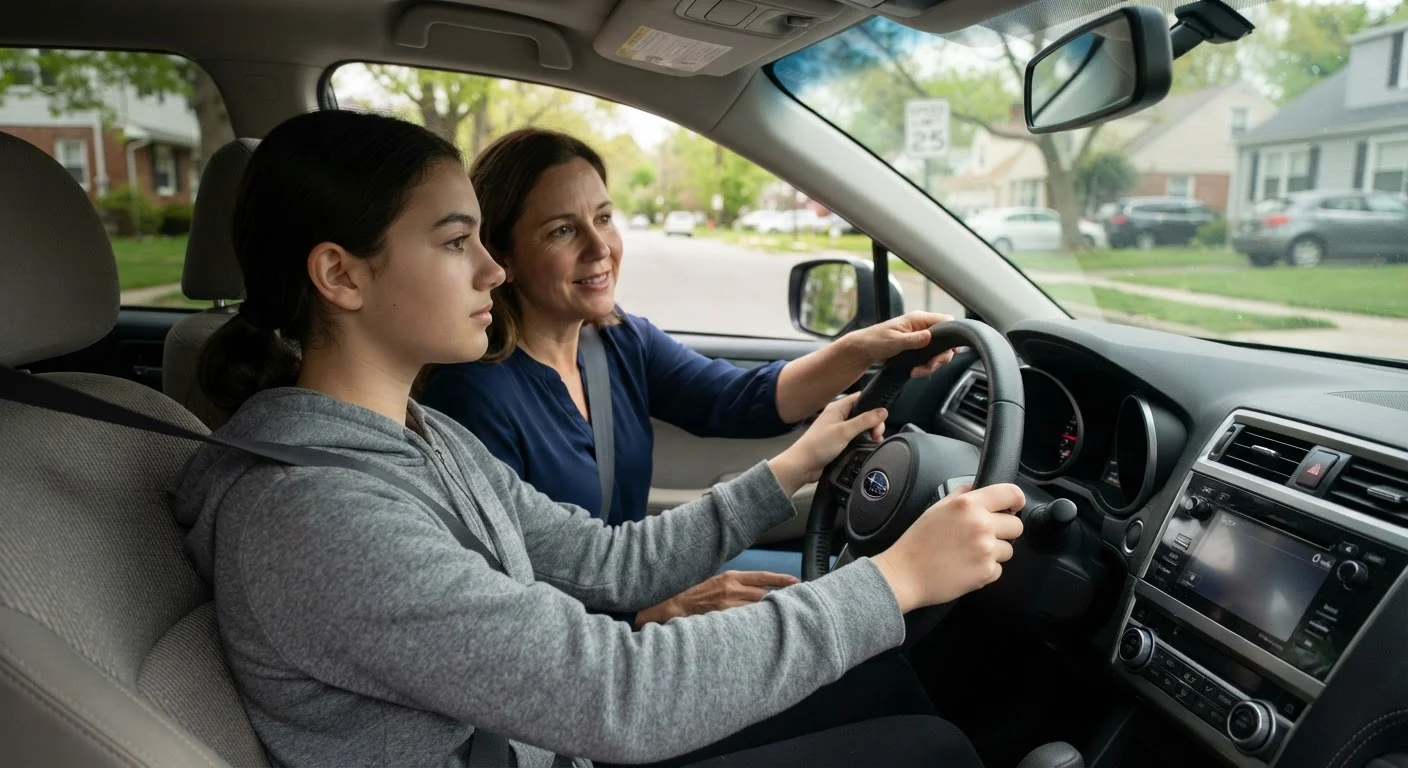
Photo credit: Glowwwatch.com
In this article
Young drivers face elevated crash risk in their first two years. This guide explains the contributing factors and how graduated licensing helps.
Key Takeaways
- Inexperience — not recklessness — is the leading cause of teen crashes.
- The first 12 months after getting a license carry the highest crash risk.
- Nighttime driving and carrying passengers significantly increase crash likelihood for new teens.
- Graduated licensing laws are designed to phase in driving privileges as skills develop.
- Parental involvement during the learning period makes a measurable difference in outcomes.
- Distraction, especially from phones, is a top contributing factor in teen crashes.
Why New Drivers Face a Steeper Learning Curve
When a teenager earns a driver's license, it represents a real milestone — but it doesn't mean they're a fully developed driver. Experience behind the wheel is something that builds over thousands of hours and hundreds of different road situations. New drivers simply haven't accumulated that yet.
The core issue is what safety researchers call the "experience gap." Experienced drivers scan intersections automatically, judge gaps in traffic without thinking, and anticipate hazards before they develop. New drivers are doing all of that consciously and often simultaneously — which overloads attention quickly.
Add in the fact that the part of the brain responsible for judgment, impulse control, and risk assessment isn't fully developed until the mid-20s, and you have a combination of limited skill and limited cognitive scaffolding. That's not a criticism of teens — it's biology. Recognizing it helps parents and new drivers plan around it rather than be surprised by it.
For a broader foundation on developing safe habits early, see our complete introduction for new drivers.
~3x
Higher crash rate for 16–17-year-olds vs. adults
According to IIHS data, drivers aged 16–17 have crash rates roughly three times higher per mile driven than drivers aged 20 and older.
2x
Crash risk increase with one teen passenger
Research cited by the CDC indicates that one teenage passenger roughly doubles crash risk for a 16- or 17-year-old driver.
~25%
Teen traffic deaths involving speeding
The CDC reports that speeding is a contributing factor in a significant share of motor vehicle crashes involving teen drivers each year.
The Specific Situations That Increase Risk
Teen crashes don't happen randomly. Research from the IIHS and the Centers for Disease Control and Prevention (CDC) consistently points to a cluster of high-risk scenarios.
- Nighttime driving: Fatal crash rates per mile are higher at night for teens than for any other age group. Reduced visibility, fatigue, and the social dynamics of late-night outings all play a role.
- Carrying teen passengers: The presence of one teen passenger roughly doubles crash risk for a 16- or 17-year-old driver. Two or more passengers increases risk even further. The mechanism is distraction and social pressure to perform or take chances.
- Phone use: Texting while driving takes eyes off the road for an average of five seconds — enough time to travel the length of a football field at highway speeds. Young drivers are among the highest users of phones while driving.
- Speeding: Teens are more likely than older drivers to underestimate how speed affects stopping distances and vehicle control, especially on curves or wet roads.
Understanding where risk concentrates helps families set rules that target the actual danger points rather than relying on general caution.
For more on the situations that trip up even experienced drivers, our guide to avoidable driving errors is worth reading.
How Graduated Licensing Works — and Why It Matters
Graduated Driver Licensing (GDL) systems exist in all 50 states, though the specific rules vary by state. The basic structure moves a new driver through three stages: a supervised learner's permit, a restricted provisional license, and eventually a full license.
The provisional stage is where GDL does the most work. Typical restrictions during this phase include:
- No driving between certain nighttime hours (often 11 p.m. to 5 a.m.)
- Limits on carrying non-family teen passengers
- Zero-tolerance blood alcohol limits
- Cellphone restrictions beyond what applies to adults
These aren't arbitrary rules. Each restriction directly targets one of the documented high-risk scenarios outlined above. States with stronger GDL provisions have seen measurable reductions in teen crash fatalities compared to states with weaker laws.
Check Your State's GDL Rules
GDL laws differ significantly from state to state — nighttime curfews, passenger limits, and phone restrictions all vary. Look up your state's specific rules through your state DMV website so you know exactly what applies to your teen's provisional license. Then consider whether your household rules should go further.
Parents play a role here too. Even where GDL rules are in effect, household rules can be stricter — and many safety advocates recommend they be. A teen who agrees to check in after arriving somewhere, or who knows their parents will answer the phone at 2 a.m. without judgment, is more likely to make the safer call in a difficult moment.
What Parents and Teen Drivers Can Do Right Now
The research is consistent: the quality and variety of supervised practice hours matters more than just hitting a minimum number. Teens who practice in rain, on highways, in parking lots at night, and in unfamiliar areas develop broader competence than those who only drive familiar routes in good weather.
A few practical approaches that align with what safety research supports:
- Set a written family agreement. Document rules around passengers, phone use, curfews, and what to do if a teen ever feels unsafe. Writing it down removes ambiguity.
- Practice high-risk scenarios specifically. Don't avoid highway merging or parallel parking — practice them repeatedly until they feel routine.
- Model the behavior you expect. Teens notice when adults speed, run yellow lights, or glance at phones. Consistency matters.
- Keep the conversation going. Ask about specific drives. What was tricky? What surprised them? Debrief regularly rather than waiting for a problem.
For everything that comes after the license is earned — insurance, registration, and maintaining the vehicle — our first-time car ownership guide covers the next steps in plain terms.
Frequently Asked Questions

Author
Autos Editorial Team
Autos Editorial Team is the collective byline for our editorial team and contributor network. Articles published under this byline or an editorial pen name are researched, written, and reviewed according to our editorial standards for clarity, consistency, and independence before publication.
View all articles →