
Month-to-Month vs. Fixed-Term Lease: Which Structure Fits Your Life?
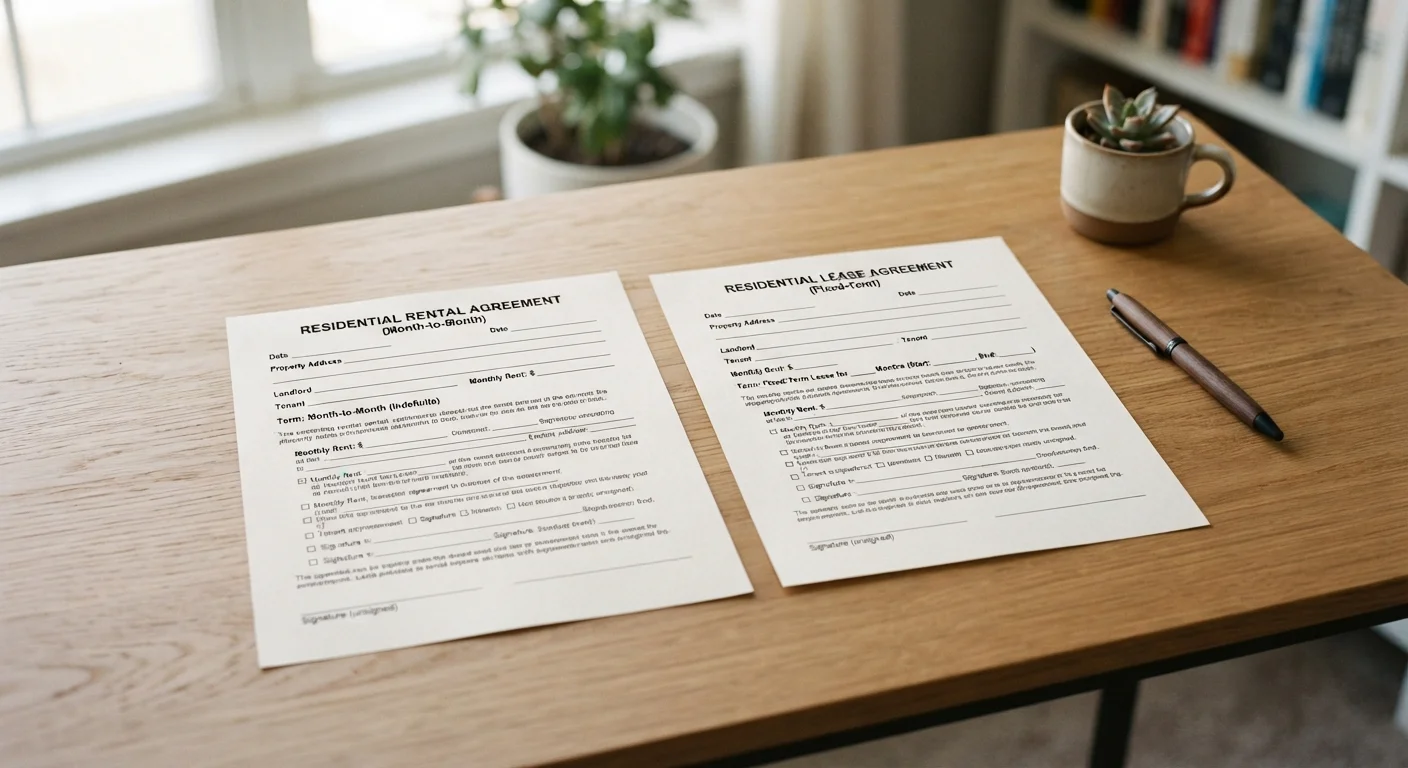
Photo credit: Glowwwatch.com
In this article
Flexibility or stability? Compare month-to-month and fixed-term lease structures to see which rental arrangement suits your situation.
Key Takeaways
- Month-to-month leases offer flexibility but typically come with higher monthly rent and less housing stability.
- Fixed-term leases lock in your rent and tenancy for a set period, usually 12 months, providing predictability.
- Breaking a fixed-term lease early can result in significant financial penalties outlined in your contract.
- Landlords can end a month-to-month tenancy with relatively short notice, typically 30 days in most states.
- Your life circumstances — job stability, family plans, local market conditions — should drive your lease choice.
- Lease terms are sometimes negotiable; asking about structure and length is a legitimate part of the rental process.
How Each Lease Structure Works
A fixed-term lease is a rental agreement that runs for a defined period — most commonly 12 months, though six-month and two-year terms exist. During that window, both landlord and tenant are bound by the agreed conditions. Your rent cannot be raised mid-lease (unless the lease explicitly allows it), and neither party can unilaterally end the arrangement without triggering penalties or legal consequences.
A month-to-month lease (also called a periodic tenancy) renews automatically each month under the same general terms. Either party can terminate it with proper notice — typically 30 days in most states, though some require more. This rolling structure is sometimes offered at the end of a fixed-term lease as a natural transition, or from the start for short-stay situations.
Both agreements are legally binding contracts. Regardless of which you sign, your rights and obligations — covering security deposits, maintenance responsibilities, and notice requirements — are governed by your state's landlord-tenant law. Always read the full lease text before signing, and ask questions about anything unclear. For renters considering shared arrangements, see our guide on co-signing and joint leases for added context.
| Criterion | Month-to-Month Lease | Fixed-Term Lease |
|---|---|---|
| Typical duration | Renews monthly, no end date | Set period, commonly 12 months |
| Rent stability | Can change with proper notice | Locked for lease term |
| Flexibility to leave | High — 30-day notice typical | Low — early exit fees apply |
| Monthly cost | Often higher (flexibility premium) | Usually lower per month |
| Landlord termination risk | Higher — can end with notice | Lower — protected during term |
| Ideal planning horizon | Less than 6–12 months | 12 months or more |
| Best market conditions | Stable or falling rent market | Rising or competitive market |
The Trade-Offs: Flexibility vs. Stability
The core tension between these two structures comes down to two competing priorities: flexibility and stability. Neither is objectively superior — the right choice depends entirely on your circumstances.
Month-to-month advantages: You can respond to life changes quickly. A new job offer in another city, a decision to buy a home, or an unsatisfactory living situation can all be addressed with a month's notice rather than a contract buyout. This agility has real financial value for people in transitional phases of life.
Month-to-month disadvantages: That flexibility comes at a cost — often literally. Landlords frequently charge a premium for month-to-month arrangements, sometimes 10–20% above the equivalent fixed-term rate. You also face displacement risk: if the landlord wants to renovate, sell, or re-rent at a higher rate, they can give you notice and move on.
Fixed-term advantages: Your rent is locked for the lease duration. In markets where rents are rising, this can represent meaningful savings over time. You also have greater security — your landlord cannot ask you to vacate without cause during the term.
Fixed-term disadvantages: Life doesn't always cooperate with 12-month commitments. Early termination clauses vary widely, but many require payment of several months' remaining rent or forfeiture of the security deposit. Review this clause carefully before signing.
State Law Governs Notice Requirements
The required notice period to end a month-to-month tenancy varies by state — some require 30 days, others 60 or even 90. A handful of jurisdictions also restrict when and why a landlord can end a periodic tenancy. Before you sign or terminate any lease, verify the specific rules that apply in your state or city, as local ordinances sometimes provide additional protections beyond state minimums.
If you're in a position to negotiate, lease length and structure are often more flexible than renters assume. Our article on negotiating rent and lease terms explains what's realistically on the table.
Matching Your Lease to Your Life Stage
The best lease structure is the one that aligns with your actual plans, not an abstract ideal. Consider these scenarios:
- Early in your career or new to a city: A month-to-month or short fixed term lets you test the neighborhood and commute before committing longer. Stability is less critical when circumstances are still forming.
- Settled with a stable job and local ties: A 12-month fixed lease offers financial predictability and a home base. In competitive markets, it also protects you from being priced out mid-year.
- Planning to buy within 12–18 months: This is where the decision gets nuanced. A month-to-month lease gives you flexibility to move when your purchase closes, but a fixed term might be unavoidable in markets with low rental inventory. Budget carefully for any potential overlap or early-exit cost.
- Temporary relocation (work assignment, contract role): Month-to-month is usually the practical choice, though corporate housing or furnished short-term rentals may also be worth exploring.
If you're weighing whether to rent at all, our framework on renting vs. buying can help you think through the broader financial and lifestyle trade-offs before committing to either path.
This article is for general informational purposes only and does not constitute legal or financial advice. Lease laws vary by state and locality — consult a licensed attorney or qualified housing counselor for guidance specific to your situation.

Author
Real Estate Editorial Team
Real Estate Editorial Team is the collective byline for our editorial team and contributor network. Articles published under this byline or an editorial pen name are researched, written, and reviewed according to our editorial standards for clarity, consistency, and independence before publication.
View all articles →