
Earnest Money Deposits: What They Are and When You Can Lose One
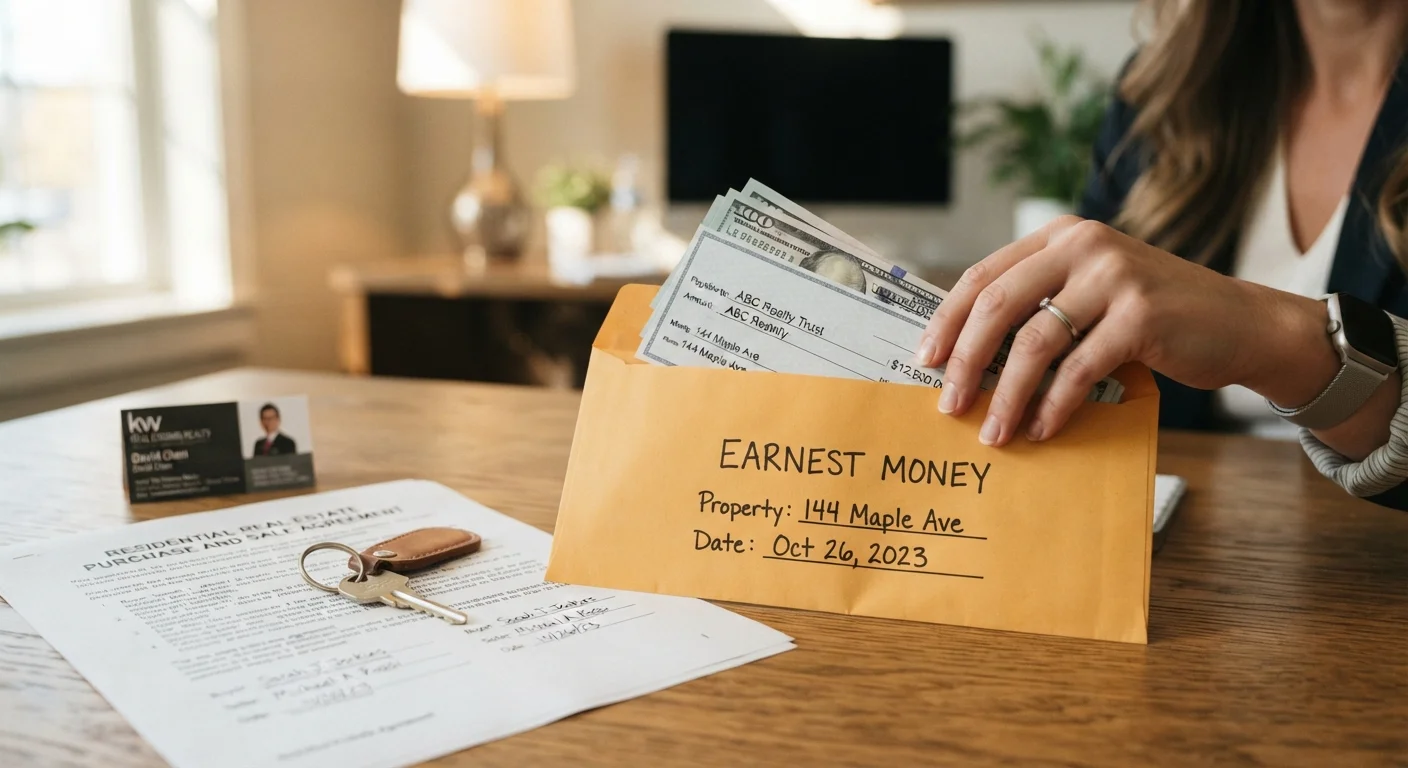
Photo credit: Glowwwatch.com
In this article
Earnest money signals serious intent to a seller—but the wrong move can cost you that deposit. Here's how it works and when it's at risk.
Key Takeaways
- Earnest money is typically 1%–3% of the home's purchase price, though amounts vary by market.
- The deposit is held in escrow by a neutral third party — not handed directly to the seller.
- Contingencies written into the contract are your primary protection against losing the deposit.
- Waiving contingencies or missing deadlines are the most common ways buyers forfeit earnest money.
- If the seller backs out, the buyer is generally entitled to a full refund of the deposit.
How Earnest Money Fits Into a Home Purchase
When a seller accepts your offer, the transaction doesn't close overnight. There's a period — often 30 to 60 days — during which inspections are completed, financing is finalized, and title is cleared. During that window, the seller takes the home off the market and turns away other buyers. Earnest money is how you demonstrate that your commitment is real.
The deposit is typically due within one to three business days of the contract being signed. It goes into an escrow account — a neutral holding account managed by a title company, escrow company, or real estate brokerage — where it stays until closing or until the deal is terminated. The seller cannot access those funds during this period.
At closing, the earnest money is credited toward what you owe, reducing the cash you need to bring to the table. If you're putting 10% down on a $350,000 home, and you deposited $5,000 in earnest money, you'd bring $30,000 rather than $35,000 at closing. For more terminology like this, see real estate terms every first-time buyer should understand.
1%–3%
Typical earnest money deposit range
Most U.S. purchase contracts call for 1% to 3% of the home's purchase price, though amounts vary by local market norms and competition.
30–60 days
Typical escrow period length
The period between accepted offer and closing — when earnest money sits in escrow — commonly runs 30 to 60 days depending on financing and local customs.
3 days
Typical deadline to submit deposit
Purchase contracts generally require the earnest money deposit to be delivered within one to three business days of the seller's acceptance.
When You Can Lose Your Earnest Money
The conditions under which you can forfeit your deposit are spelled out in the purchase contract. Understanding these scenarios before you sign is essential.
Waiving or Missing Contingency Deadlines
Contingencies are contract clauses that allow you to exit the deal — and recover your deposit — if specific conditions aren't met. The three most common are:
- Inspection contingency: Lets you back out if the home inspection reveals problems you can't accept.
- Financing contingency: Protects you if your mortgage falls through.
- Appraisal contingency: Allows you to renegotiate or exit if the home appraises below the purchase price.
If you waive these contingencies to make your offer more competitive — a common tactic in hot markets — you lose the safety net they provide. Missing a contingency deadline can have the same effect, as some contracts treat an expired deadline as a waiver.
Simply Changing Your Mind
Cold feet without a contractual exit clause will generally cost you the deposit. If you decide you no longer want the home and have no active contingency to invoke, the seller can typically claim the earnest money as compensation for the time the property was off the market.
Read Every Deadline in Your Contract
Purchase contracts list specific dates by which you must complete inspections, secure financing, and respond to issues. Mark these on your calendar the day you sign. Missing a contingency deadline — even unintentionally — can be treated as a waiver, putting your deposit at risk. Your real estate agent should help you track these milestones, but the responsibility ultimately rests with you.
Protecting Your Deposit: What Buyers Should Know
The strongest protection a buyer has is a well-written contract with clear contingencies and realistic deadlines. Work with a licensed real estate agent and, if needed, a real estate attorney to ensure the contract reflects your actual risk tolerance.
A few practical steps that can help safeguard your deposit:
- Never pay earnest money directly to the seller. It should always go to a licensed escrow holder or title company.
- Track your contingency deadlines carefully. Missing them — even by a day — can jeopardize your right to a refund.
- Get everything in writing. If you and the seller agree to an extension or a change in terms, confirm it as a written amendment to the contract.
- Understand what you're waiving before you waive it. In competitive markets, some buyers choose to waive the inspection contingency. Know the financial risk you're accepting if you do.
It's also worth ensuring your broader finances are stable before making an offer. Having a solid emergency fund separate from your down payment means an unexpected repair or closing delay doesn't derail your purchase entirely.
This article is for general informational and educational purposes only. It is not legal or financial advice. Real estate contracts and state laws vary — consult a licensed real estate professional or attorney for guidance specific to your transaction.
Frequently Asked Questions

Author
Real Estate Editorial Team
Real Estate Editorial Team is the collective byline for our editorial team and contributor network. Articles published under this byline or an editorial pen name are researched, written, and reviewed according to our editorial standards for clarity, consistency, and independence before publication.
View all articles →