
Garaged vs. Street-Parked: How Storage Affects Your Vehicle Over Time
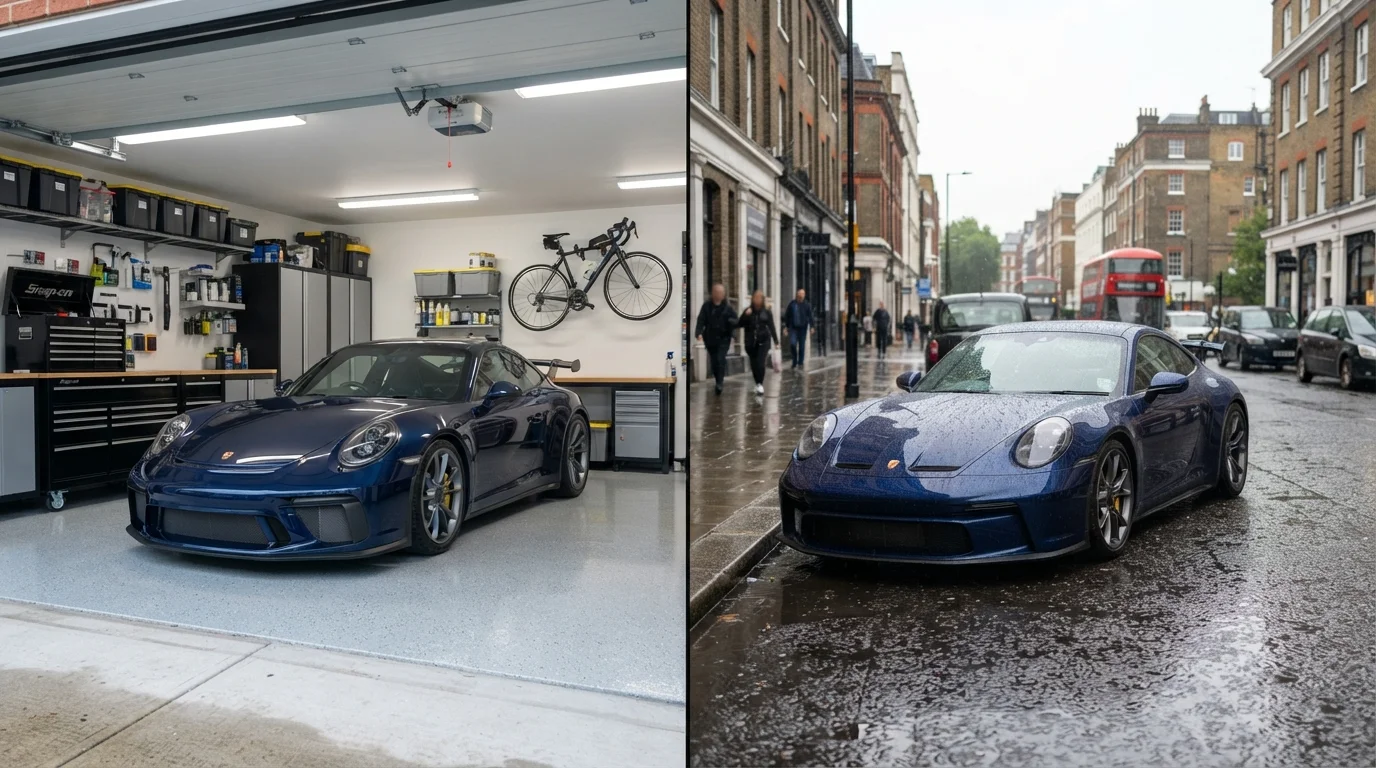
Photo credit: Glowwwatch.com
In this article
Where you park your car each night has real consequences for its condition, insurance, and lifespan. Here's what the research suggests.
Key Takeaways
- Garaged vehicles are generally better protected from UV damage, rust, and temperature extremes.
- Street parking exposes cars to weather, road debris, and a higher risk of minor collisions.
- Your parking situation can influence insurance premiums, though impact varies by insurer and location.
- Regular maintenance matters regardless of where you park — storage alone doesn't prevent mechanical wear.
- Resale value is often higher for vehicles with consistent garage storage and lower cosmetic wear.
Why Parking Location Is a Real Maintenance Factor
Most drivers think about maintenance in terms of oil changes and tire rotations — not where the car sits when it's not moving. But a vehicle parked outside for years accumulates a kind of slow-motion wear that's easy to overlook until it shows up as faded paint, rust bubbles along door seams, or a cracked dashboard.
Where you store your vehicle each night is, in a practical sense, a maintenance decision. It determines how much UV radiation hits the paint, how often the body is soaked and dried, and whether moisture has a chance to work into vulnerable metal seams. For a full picture of what keeps a car in good shape over time, see our guide on long-term vehicle care.
This comparison walks through the specific ways each storage environment affects your car — so you can make smarter decisions regardless of what your driveway (or lack of one) looks like.
How Each Environment Affects Your Vehicle
The differences between garaged and street-parked vehicles tend to build gradually, but they're real and measurable in several categories.
Paint and Exterior
Sunlight is one of the most consistent threats to a car's finish. Ultraviolet radiation breaks down the clear coat that protects paint, leading to oxidation — the chalky, faded look common on older vehicles kept outdoors. Garaged cars avoid most of this exposure. Street-parked cars also contend with bird droppings, tree sap, and airborne debris, all of which can etch into paint if left untreated.
Rust and Corrosion
Moisture is the primary driver of rust. Cars parked outside are repeatedly wet and dried — especially in regions with rain, snow, or heavy dew. Salt used for winter road treatment accelerates this significantly. Garaged vehicles dry out faster and are less frequently exposed to standing moisture in wheel wells, undercarriage seams, and door edges.
Interior and Mechanical Components
Temperature extremes stress rubber seals, plastic trim, and upholstery. In hot climates, dashboards crack and seat materials degrade faster when the car is repeatedly baked in direct sun. In cold climates, fluids thicken and batteries face extra strain from overnight cold soaks. A garage buffers both extremes — not perfectly, but meaningfully.
| Garaged | Street Parked | |
|---|---|---|
| UV / paint protection | Strong — shielded from direct sun | Minimal — ongoing UV exposure |
| Rust and corrosion risk | Lower — dries faster, less moisture exposure | Higher — repeated wet/dry cycles |
| Interior degradation | Slower — buffered from temperature extremes | Faster — heat and cold stress materials |
| Minor collision/ding risk | Very low | Moderate to high |
| Insurance premium impact | Often slightly lower | Often slightly higher |
| Resale / cosmetic condition | Tends to be better preserved | More cosmetic wear over time |
| Cost to owner | May require garage rent or mortgage premium | Usually no direct added cost |
Security and Collision Risk
Street-parked vehicles are statistically more likely to be involved in minor collisions — door dings, side-swipes from passing traffic, or incidents during parking. Garage parking removes this risk almost entirely, though garages introduce their own hazards like low clearances or tight maneuvering.
Insurance and Resale Value Considerations
Parking location is a factor many auto insurers consider when calculating premiums. Vehicles stored in a private garage are generally seen as lower risk for theft and weather-related damage, which can translate to modest savings — though the exact impact varies widely by insurer, location, and coverage type. It's worth asking your insurer directly whether your parking situation affects your rate.
On the resale side, cosmetic condition plays a meaningful role in what a used vehicle is worth. A car with clean, unfaded paint and no rust commands more interest than one showing exterior wear, even if both have identical mechanical histories. Depreciation is shaped by more than mileage — condition matters too. Our article on how vehicle depreciation works explains how cosmetic and storage factors can influence your car's value over time.
For lessees, this is especially relevant. Most lease agreements include clauses about excess wear and tear, and paint or interior damage from prolonged outdoor exposure can result in charges at turn-in. See leasing vs. financing for more on how ownership structure affects these decisions.
Ask Your Insurer About Parking Discounts
If you recently gained access to a garage — whether by moving or renting a space — let your insurance company know. Some insurers adjust premiums based on where the vehicle is stored overnight, and the update could be worth a few dollars a month. It only takes a phone call to find out.
Practical Steps for Street Parkers
Not everyone has access to a garage, and that's a straightforward reality in most cities and many suburbs. The good news is that consistent habits can offset a meaningful portion of the wear that outdoor storage causes.
- Use a quality car cover when the vehicle will sit for extended periods, particularly in high-UV or high-precipitation climates.
- Wash and wax regularly — wax provides a physical barrier against UV and contaminants. Frequency depends on your climate, but quarterly waxing is a reasonable baseline for most regions.
- Address paint damage promptly. Small chips and scratches that expose bare metal should be touched up before rust has a chance to start.
- Rinse the undercarriage after winter driving in areas where road salt is used. Many car washes offer undercarriage rinse options.
- Check battery health before winter if your car sits outside in a cold climate. Cold temperatures reduce battery capacity, and an aging battery is more likely to fail after repeated cold soaks.
Pairing these habits with a solid maintenance schedule keeps most of the storage disadvantage in check. Our car ownership maintenance guide covers the full scope of upkeep tasks worth staying on top of, regardless of where you park.

Author
Autos Editorial Team
Autos Editorial Team is the collective byline for our editorial team and contributor network. Articles published under this byline or an editorial pen name are researched, written, and reviewed according to our editorial standards for clarity, consistency, and independence before publication.
View all articles →